The NFO exists for two main reasons: to provide free, fair and impartial dispute resolution solutions for financial services consumers who feel they have been mistreated by their bank, insurer or credit provider, and to help to educate South African consumers on financial services.
The consumer education aspect of our remit is something we are deeply committed to, as evidenced by our publications, our online presence, and innovations such as our monthly presence at the Law Clinic at Stellenbosch University, which gives more consumers access to our dispute resolution services.
As financial services become increasingly digitised, there is a risk that unbanked or underbanked South Africans could be excluded, and this is something we are actively seeking to address. We are also aware that while these new technologies can be convenient, they can inadvertently create new opportunities for fraudsters, so much of our consumer education work is geared towards helping people to safely access and use financial services.
At the core of our consumer education work is an emphasis on golden rules such as act early when in financial difficulty, always read the small print and keep records of every transaction and interaction.
Key achievements in 2026 YTD
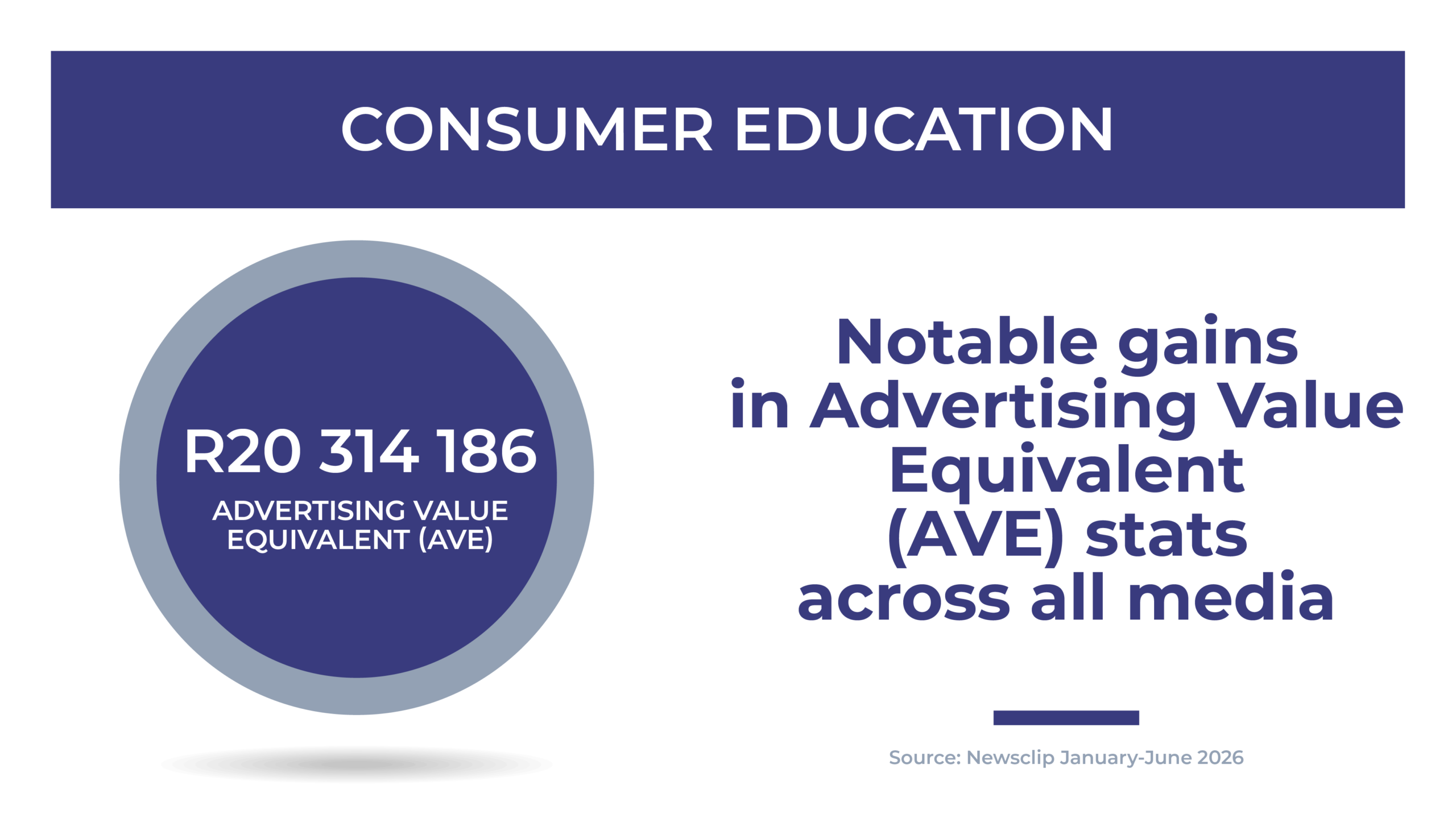
- From January to June 2026 , the NFO delivered a strong and measurable media performance, reflecting growing visibility, credibility, and relevance across South Africa’s media landscape. An impressive 10 press releases were published during this reporting period, generating a total Advertising Value Equivalent (AVE) of R20 314 186, with an outstanding readership and listenership across the print, broadcast, and online platforms.
- 70 stakeholder events across nine provinces, reaching 20,187 financial services consumers.
- Sustained activity on the NFO website and across the social media landscape (Facebook/ Meta, Twitter and LinkedIn) with growth trending in impressions across their platforms.
- A marked increase in user views of the 2025 Annual Report compared to the 2024 edition was noted – 14.5 %.